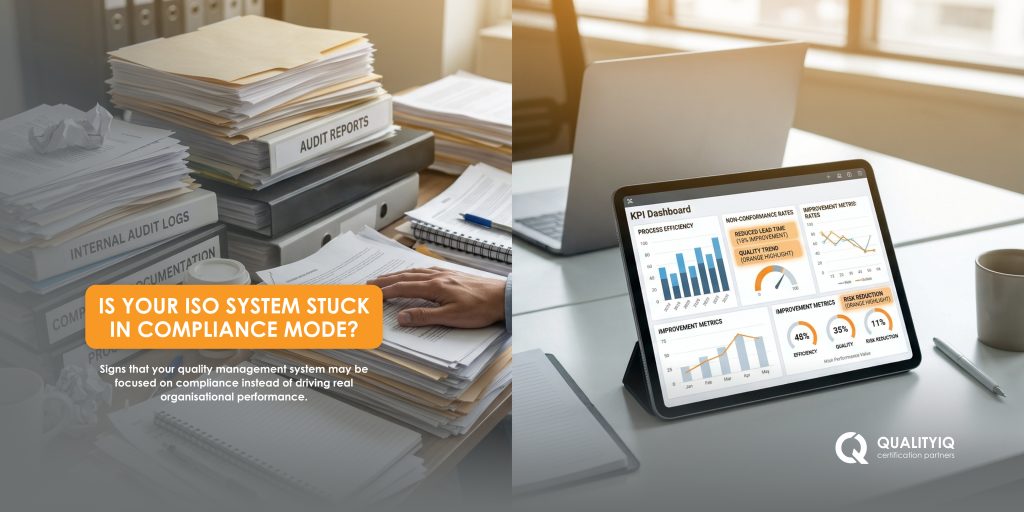
Many organisations hold ISO certification but struggle to see meaningful operational benefits from their quality management systems.
In many cases, the issue is not the framework itself, but how the system is being used.
Here are five common signs that an ISO system is operating in compliance mode rather than performance mode.
1. Audits Are the Only Time the System Gets Attention
If documentation and procedures are only reviewed in preparation for audits, the system is functioning as a compliance checklist rather than a management tool.
High-performing organisations integrate their systems into daily operations and decision-making.
2. Leadership Engagement Is Limited
When management reviews are treated as formalities, leadership loses a valuable opportunity to gain insight into organisational performance and risk.
Effective systems involve executives actively using the framework to guide strategic discussions.
3. KPIs Are Disconnected from Strategy
Quality metrics often exist, but they are not clearly linked to broader business objectives.
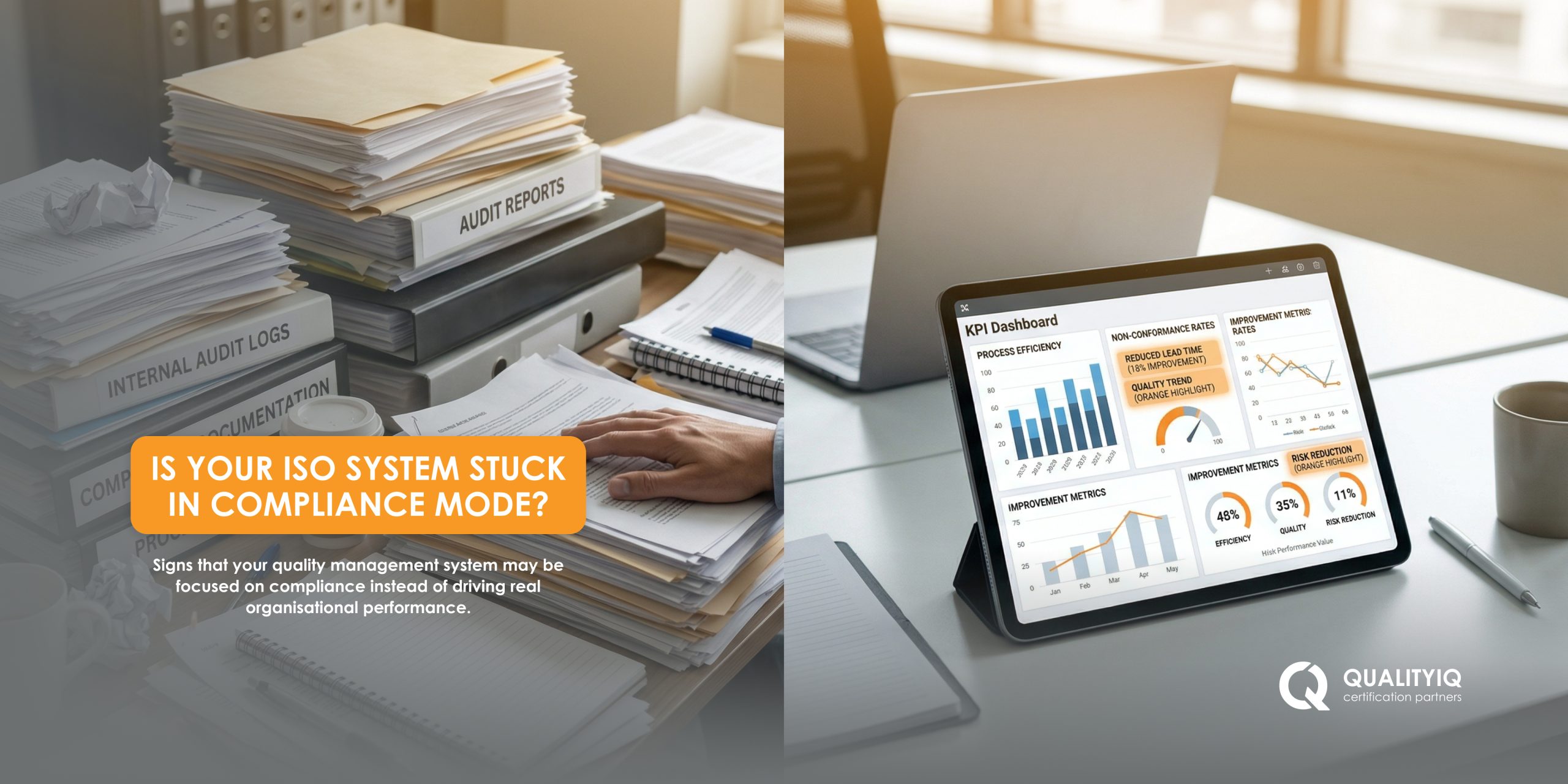
A mature system aligns operational metrics directly with strategic priorities, ensuring that performance measurement drives meaningful outcomes.
4. Continuous Improvement Is Reactive
Improvement initiatives are triggered mainly by audit findings or non-conformities, rather than proactive evaluation of performance.
Strategic systems encourage continuous improvement driven by data, trends, and forward-looking insights.
5. Employees See ISO as “Extra Work”
When teams view ISO as paperwork rather than operational support, the system has failed to integrate into the organisation’s culture.
The most effective systems simplify processes, clarify responsibilities, and support how work is actually done.
Moving From Compliance to Strategic Value
The organisations gaining the greatest benefit from ISO certification are those that treat their systems as management tools, not audit frameworks.
This shift requires:
- Active leadership involvement
- Clear alignment between strategy and operational metrics
- A commitment to using the system as a driver of continuous improvement
When these elements come together, ISO stops being a compliance exercise and becomes a foundation for better decision-making, stronger performance, and long-term organisational resilience.