Skip to content
1 300 899 443
Get An Estimate

Audit-Ready vs Business-Ready: Why Passing ISO Audits Isn’t Enough Anymore

As organisations move into March, a familiar cycle begins. Internal audits are scheduled. Surveillance audits loom. Compliance reviews surface long-standing issues that have quietly been deferred since last year.

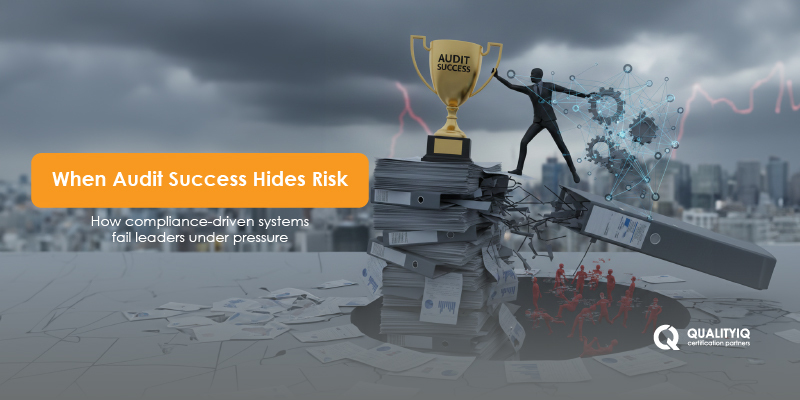
For many ISO-certified organisations, this period exposes an uncomfortable reality: while the business may be audit-ready, it is not always business-ready.

Passing an audit remains an important milestone but it is increasingly clear that certification alone does not guarantee operational strength, resilience, or performance.

The Rise of “Audit Theatre”

Across industries, a pattern has emerged. Systems are maintained just well enough to satisfy auditors, but not well enough to support leaders in making confident decisions.

This phenomenon is often referred to as audit theatre. This shows up in predictable ways:

  • Procedures that look compliant but aren’t used day to day
  • Risk registers updated only before audits
  • KPIs tracked for reporting, not decision-making
  • Corrective actions closed administratively, not operationally

On paper, these systems pass. In practice, they add little value.

Auditors, constrained by scope and sampling, may approve systems that technically meet standard requirements. Meanwhile, leadership teams often lack trust in the very systems designed to support them.

Why Auditors Pass Systems Leaders Don’t Trust

ISO standards are designed to be flexible and scalable. This is a strength but it also means organisations can meet minimum requirements without embedding quality into operations.

Audits typically assess:

  • Documented intent
  • Evidence of compliance
  • Conformance at a point in time

They do not always reveal:

  • Whether data is actively used in decision-making
  • Whether processes work under pressure
  • Whether teams rely on the system or work around it

As a result, organisations may pass audits while still experiencing inconsistent performance, recurring issues, and operational fragility.

The Hidden Cost of Being Audit-Ready Only

When quality systems exist primarily to satisfy audits, the business pays a quiet price.

Leadership teams rely on intuition instead of data. Problems reoccur under new labels. Knowledge stays locked in individuals rather than systems. Growth amplifies inconsistency instead of capability.

In these environments, audits become events to survive, not tools to improve.

Over time, quality is perceived as administrative overhead rather than strategic infrastructure. This mindset limits the return on ISO investment and undermines confidence at every level of the organisation.

From Findings to Function: Making Audits Work for the Business

A business-ready quality system treats audit findings differently.

Instead of asking, “How do we close this nonconformance?” the question becomes, “What is this telling us about how the business actually operates?”

In business-ready organisations:

  • Audit findings are linked to operational priorities
  • Root cause analysis focuses on system behaviour, not blame
  • Corrective actions improve workflows, not just documentation
  • Leadership reviews drive decisions, not just minutes

Audits become checkpoints for system effectiveness, not box-ticking exercises.

Business-Ready Systems Look Different

The difference between audit-ready and business-ready systems is not about more documentation or stricter controls. It’s about intent and integration.

Business-ready systems:

  • Support leaders with timely, reliable data
  • Reduce dependency on individual knowledge
  • Enable consistency without killing flexibility
  • Hold up under change, growth, and disruption

They are designed to serve the business first and satisfy auditors as a natural outcome.

A Timely Wake-Up Call for ISO-Certified Organisations

March is often when the cracks become visible. What felt manageable in January starts to strain under real operating conditions.

For ISO-certified organisations stuck in maintenance mode, this moment presents a choice: continue preparing for audits or start preparing the business.

The organisations that thrive are those that stop asking whether they will pass their next audit, and start asking a more powerful question:

“If our quality system disappeared tomorrow, what would actually stop working?”

The answer to that question reveals whether a business is truly ready for audits, and for the future.

GO BACK

Contact Us

Oberon NSW Pty Limited t/as QualityIQ
ABN: 45 055 307 572

Phone Number
1300 899 443

Email
info@qualityiq.com.au

Office Address
S2/L29 259 George Street
Sydney NSW 2000 Australia

Postal Address
PO Box 6238 Norwest
NSW 2153 Australia

By submitting this question your email address will be added to our communication list. This list is not shared with anyone else. You will receive our monthly e-news so that we stay in touch. You can unsubscribe at any time if the information we provide is not helpful.

QualityIQ

  • Why Us
  • Our Team
  • Guarantee
  • Portfolio
  • Testimonials

ISO  9001

  • Certifications Process
  • Our Proven 5 Step Framework
  • Our Unique Approach
  • Your Seamless Quality Support
  • Your Unified Quality System

Resources

  • Case Studies
  • Pricing
  • Resources
  • Articles & News
  • Contact Us
  • Get An Estimate

Subscribe to our Newsletter

Follow Us

Facebook Linkedin
© Copyright QualityIQ Certifications Partners 2026
| Privacy Policy

Get an Estimate

More about us and what we need
By submitting this request your email address will be added to our communication list. This list is not shared with anyone else. You will receive our monthly e-news so that we stay in touch. You can unsubscribe at any time if the information we provide is not helpful.
  • Home
  • About Us
    • Why Us
    • Our Team
    • Guarantee
    • Portfolio
    • Testimonials
  • Services
    • Certification Process
    • Our Proven 5 Step Framework​
    • Our Unique Approach
    • Your Seamless Quality Support
    • Your Unified Quality System
  • Solutions
  • Industries
    • Manufacturing
    • Inventory Management
    • Professional Services
    • Logistics
  • Case Studies
  • Pricing
  • Resources
  • Articles & News
  • Contact Us
QualityIQ Website © 2024 All Rights Reserved
Facebook Linkedin

As organisations move into March, a familiar cycle begins. Internal audits are scheduled. Surveillance audits loom. Compliance reviews surface long-standing issues that have quietly been deferred since last year.

For many ISO-certified organisations, this period exposes an uncomfortable reality: while the business may be audit-ready, it is not always business-ready.

Passing an audit remains an important milestone but it is increasingly clear that certification alone does not guarantee operational strength, resilience, or performance.

The Rise of “Audit Theatre”

Across industries, a pattern has emerged. Systems are maintained just well enough to satisfy auditors, but not well enough to support leaders in making confident decisions.

This phenomenon is often referred to as audit theatre. This shows up in predictable ways:

  • Procedures that look compliant but aren’t used day to day
  • Risk registers updated only before audits
  • KPIs tracked for reporting, not decision-making
  • Corrective actions closed administratively, not operationally

On paper, these systems pass. In practice, they add little value.

Auditors, constrained by scope and sampling, may approve systems that technically meet standard requirements. Meanwhile, leadership teams often lack trust in the very systems designed to support them.

Why Auditors Pass Systems Leaders Don’t Trust

ISO standards are designed to be flexible and scalable. This is a strength but it also means organisations can meet minimum requirements without embedding quality into operations.

Audits typically assess:

  • Documented intent
  • Evidence of compliance
  • Conformance at a point in time

They do not always reveal:

  • Whether data is actively used in decision-making
  • Whether processes work under pressure
  • Whether teams rely on the system or work around it

As a result, organisations may pass audits while still experiencing inconsistent performance, recurring issues, and operational fragility.

The Hidden Cost of Being Audit-Ready Only

When quality systems exist primarily to satisfy audits, the business pays a quiet price.

Leadership teams rely on intuition instead of data. Problems reoccur under new labels. Knowledge stays locked in individuals rather than systems. Growth amplifies inconsistency instead of capability.

In these environments, audits become events to survive, not tools to improve.

Over time, quality is perceived as administrative overhead rather than strategic infrastructure. This mindset limits the return on ISO investment and undermines confidence at every level of the organisation.

From Findings to Function: Making Audits Work for the Business

A business-ready quality system treats audit findings differently.

Instead of asking, “How do we close this nonconformance?” the question becomes, “What is this telling us about how the business actually operates?”

In business-ready organisations:

  • Audit findings are linked to operational priorities
  • Root cause analysis focuses on system behaviour, not blame
  • Corrective actions improve workflows, not just documentation
  • Leadership reviews drive decisions, not just minutes

Audits become checkpoints for system effectiveness, not box-ticking exercises.

Business-Ready Systems Look Different

The difference between audit-ready and business-ready systems is not about more documentation or stricter controls. It’s about intent and integration.

Business-ready systems:

  • Support leaders with timely, reliable data
  • Reduce dependency on individual knowledge
  • Enable consistency without killing flexibility
  • Hold up under change, growth, and disruption

They are designed to serve the business first and satisfy auditors as a natural outcome.

A Timely Wake-Up Call for ISO-Certified Organisations

March is often when the cracks become visible. What felt manageable in January starts to strain under real operating conditions.

For ISO-certified organisations stuck in maintenance mode, this moment presents a choice: continue preparing for audits or start preparing the business.

The organisations that thrive are those that stop asking whether they will pass their next audit, and start asking a more powerful question:

“If our quality system disappeared tomorrow, what would actually stop working?”

The answer to that question reveals whether a business is truly ready for audits, and for the future.

Audit-Ready vs Business-Ready: Why Passing ISO Audits Isn’t Enough Anymore

Audit-Ready vs Business-Ready: Why Passing ISO Audits Isn’t Enough Anymore

As organisations move into March, a familiar cycle begins. Internal audits are scheduled. Surveillance audits loom. Compliance reviews surface long-standing issues that have quietly been deferred since last year.

For many ISO-certified organisations, this period exposes an uncomfortable reality: while the business may be audit-ready, it is not always business-ready.

Passing an audit remains an important milestone but it is increasingly clear that certification alone does not guarantee operational strength, resilience, or performance.

The Rise of “Audit Theatre”

Across industries, a pattern has emerged. Systems are maintained just well enough to satisfy auditors, but not well enough to support leaders in making confident decisions.

This phenomenon is often referred to as audit theatre. This shows up in predictable ways:

  • Procedures that look compliant but aren’t used day to day
  • Risk registers updated only before audits
  • KPIs tracked for reporting, not decision-making
  • Corrective actions closed administratively, not operationally

On paper, these systems pass. In practice, they add little value.

Auditors, constrained by scope and sampling, may approve systems that technically meet standard requirements. Meanwhile, leadership teams often lack trust in the very systems designed to support them.

Why Auditors Pass Systems Leaders Don’t Trust

ISO standards are designed to be flexible and scalable. This is a strength but it also means organisations can meet minimum requirements without embedding quality into operations.

Audits typically assess:

  • Documented intent
  • Evidence of compliance
  • Conformance at a point in time

They do not always reveal:

  • Whether data is actively used in decision-making
  • Whether processes work under pressure
  • Whether teams rely on the system or work around it

As a result, organisations may pass audits while still experiencing inconsistent performance, recurring issues, and operational fragility.

The Hidden Cost of Being Audit-Ready Only

When quality systems exist primarily to satisfy audits, the business pays a quiet price.

Leadership teams rely on intuition instead of data. Problems reoccur under new labels. Knowledge stays locked in individuals rather than systems. Growth amplifies inconsistency instead of capability.

In these environments, audits become events to survive, not tools to improve.

Over time, quality is perceived as administrative overhead rather than strategic infrastructure. This mindset limits the return on ISO investment and undermines confidence at every level of the organisation.

From Findings to Function: Making Audits Work for the Business

A business-ready quality system treats audit findings differently.

Instead of asking, “How do we close this nonconformance?” the question becomes, “What is this telling us about how the business actually operates?”

In business-ready organisations:

  • Audit findings are linked to operational priorities
  • Root cause analysis focuses on system behaviour, not blame
  • Corrective actions improve workflows, not just documentation
  • Leadership reviews drive decisions, not just minutes

Audits become checkpoints for system effectiveness, not box-ticking exercises.

Business-Ready Systems Look Different

The difference between audit-ready and business-ready systems is not about more documentation or stricter controls. It’s about intent and integration.

Business-ready systems:

  • Support leaders with timely, reliable data
  • Reduce dependency on individual knowledge
  • Enable consistency without killing flexibility
  • Hold up under change, growth, and disruption

They are designed to serve the business first and satisfy auditors as a natural outcome.

A Timely Wake-Up Call for ISO-Certified Organisations

March is often when the cracks become visible. What felt manageable in January starts to strain under real operating conditions.

For ISO-certified organisations stuck in maintenance mode, this moment presents a choice: continue preparing for audits or start preparing the business.

The organisations that thrive are those that stop asking whether they will pass their next audit, and start asking a more powerful question:

“If our quality system disappeared tomorrow, what would actually stop working?”

The answer to that question reveals whether a business is truly ready for audits, and for the future.